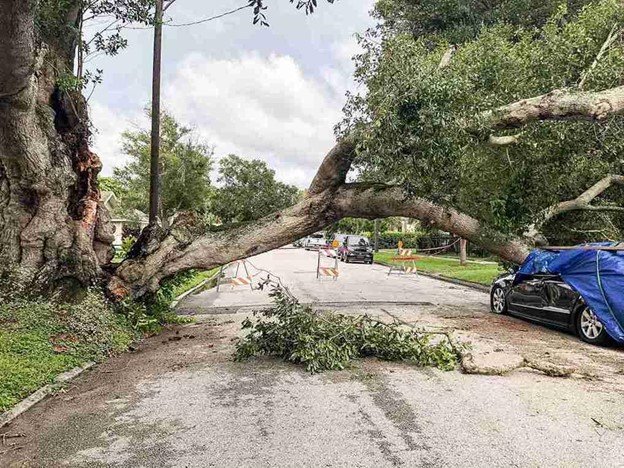
What To Do After a Storm Damages a Tree on Your Property
This comprehensive guide empowers homeowners with crucial knowledge for managing storm-damaged trees, focusing on immediate safety, detailed assessment, when to seek professional help, navigating insurance claims, and embracing future technological advancements for tree resilience.
Immediate Safety Precautions
- Downed Power Lines: Treat all downed power lines as live and dangerous. Maintain a minimum distance of 25 feet. Contact the utility company immediately.
- “Widow Makers”: Large, broken branches hanging precariously overhead are extremely dangerous and can fall without warning. Keep people and pets away from their potential fall zones.
- 24-Hour Observation: Allow a 24-hour period after the storm to observe the tree for further damage or destabilization before approaching too closely.
Tree Damage Assessment (Top-to-Bottom Inspection)
- Roots:
- Check for cracks radiating from the base, “fluffy” or raised soil, indicating upheaval.A lean exceeding 15 degrees from upright is a serious concern.
- Exposed roots or significant soil mounding on one side signal compromised stability.
- Trunk:
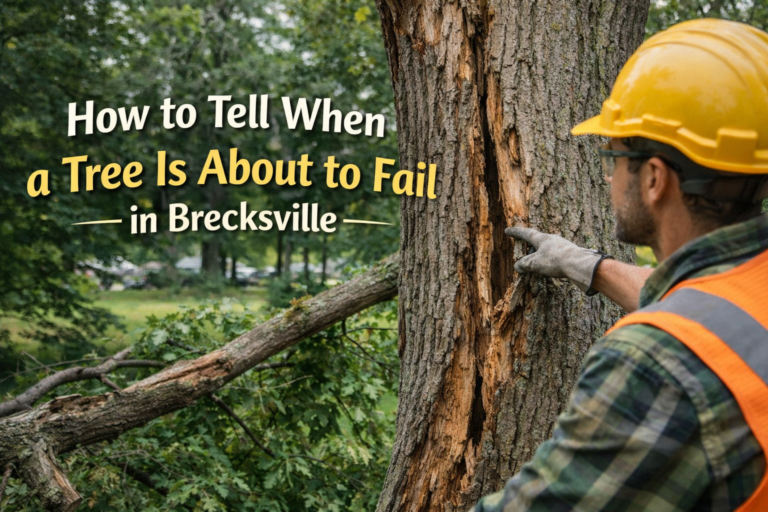
- Vertical cracks or splits, especially those allowing light to pass through, are structural weaknesses.
- Stripped bark and cavities can become entry points for pests and diseases.
- Crown & Branches:
- Identify large, broken branches posing a threat to structures or property.
- If more than 50% of the crown (leaves and major branches) is lost, the tree’s survival chances are significantly reduced.
- Open wounds from broken branches are vulnerable to pests and diseases.
- Tree Species: Younger, healthy trees are generally more resilient. Fast-growing species with weaker wood may decay faster.
- Documentation: Take date-stamped photos from multiple angles for insurance purposes.
Arborist’s Role and Techniques
- Evolving Practices: Modern arboriculture focuses on restoration and long-term health, utilizing science-backed approaches.
- Pruning:
- Immediate Priority: Remove hazardous, broken limbs.
- Three-Cut Method: Used for larger limbs to prevent bark tearing.
- Proper Cuts: Cut back to healthy wood, just outside the branch collar, avoiding flush cuts.
- Wound Care: Sealing tree wounds with dressings or paints is generally not recommended; it can hinder natural healing. Smooth ragged edges to facilitate callus tissue formation.
- Long-Term Recovery:
- Regular watering, especially during dry periods.
- Mulching around the base (avoiding direct trunk contact) to conserve moisture and regulate soil temperature.
- Future Prevention: Regular structural pruning, proactive identification of at-risk trees, and planting storm-resistant species.
Navigating Insurance Claims
- What’s Typically Covered:
- Damage to structures (house, garage, shed, fence) caused by a “covered peril” (wind, lightning, hail).
- Tree removal if a fallen tree blocks driveways or handicapped ramps, rendering the property inaccessible.
- What’s Typically NOT Covered:
- Fallen trees that cause no structural damage or block access.
- Damage from trees that were clearly rotting, diseased, or neglected (maintenance issue).
- Neighbor’s Tree Liability:
- “Act of God”: If the tree was healthy and fell due to unforeseen circumstances, you are generally responsible for your property’s damage.
- Negligence: If the neighbor knew the tree was dangerous (and you have proof of notification), they might be liable.
- Vehicle Damage: Covered by auto insurance (comprehensive coverage), not homeowner’s insurance.
- Claim Process:
- Document everything meticulously.
- Prevent further damage (temporary repairs, covering exposed areas).
- Contact your insurer promptly.Obtain multiple contractor estimates.
- Keep all receipts.
Future of Tree Resilience: Technology’s Role
- Drones: High-resolution and multispectral cameras for precise mapping of tree health, detecting stress and decay early.
- IoT Sensors: Embedded sensors monitoring vital signs (sap flow, moisture, temperature) for real-time health data and problem prediction.
- AI & Machine Learning: Analyzing weather patterns, LiDAR, drone imagery, and tree characteristics to predict at-risk trees and enable proactive intervention.
- “Digital Twins”: Virtual tree replicas to simulate growth and resilience under various conditions.
- Climate-Adaptive Arboriculture: Selecting and nurturing species suited for changing climates and extreme weather.
- Enhanced Proactive Measures: Refining traditional techniques like pruning, cabling, and bracing.
DIY Tree Care vs. Professional Interventi
When DIY is Appropriate:
- Small, fallen branches on the ground.
- Minor broken branches (under 4 inches in diameter) that are easily reachable without ladders or precarious positioning.
- Always wear safety gear: gloves, eye protection, sturdy boots.
When to Call a Certified Arborist (Non-Negotiable):
- Proximity to power lines.
- Large, suspended broken branches.
- Major cracks or splits in the trunk.
- Trees leaning significantly towards structures.
- Signs of root plate lifting or soil mounding.
- More than 50% of the crown is damaged.
- Any situation that causes unease or uncertainty.
Risks of DIY High-Risk Work:
Chainsaw accidents, falls, electrocution, further property damage, and potential invalidation of insurance claims due to negligence.
Conclusion
Managing storm-damaged trees requires prioritizing safety, thorough assessment, informed decision-making regarding professional help, and implementing long-term care.Trees are vital to ecosystems, property value, air quality, and aesthetics. Preparedness and smart practices contribute to stronger trees and safer homes.